Buy unternehmensbewertung.eu ?
We are moving the project
unternehmensbewertung.eu .
Are you interested in purchasing the domain
unternehmensbewertung.eu ?
domain@kv-gmbh.de · 0541-91531010
Buy unternehmensbewertung.eu ?
What is the manuscript submission policy of Random House publishers?
Random House does not accept unsolicited manuscripts, meaning they only consider submissions from literary agents. Authors are encouraged to find representation before submitting their work to Random House. This policy helps ensure that submissions are of a certain quality and have been vetted by professionals in the industry. **
What is the manuscript submission process for Random House publishers?
The manuscript submission process for Random House publishers typically involves sending a query letter or proposal to the appropriate editor or literary agent. If the editor or agent is interested, they may request to see the full manuscript. Once the manuscript is submitted, it will go through a review process to determine if it aligns with the publisher's needs and standards. If the manuscript is accepted, the author will work with an editor to prepare the book for publication. **
Similar search terms for Random-House-Business-Harriman
Top-Angebote
Products related to Random-House-Business-Harriman:
-
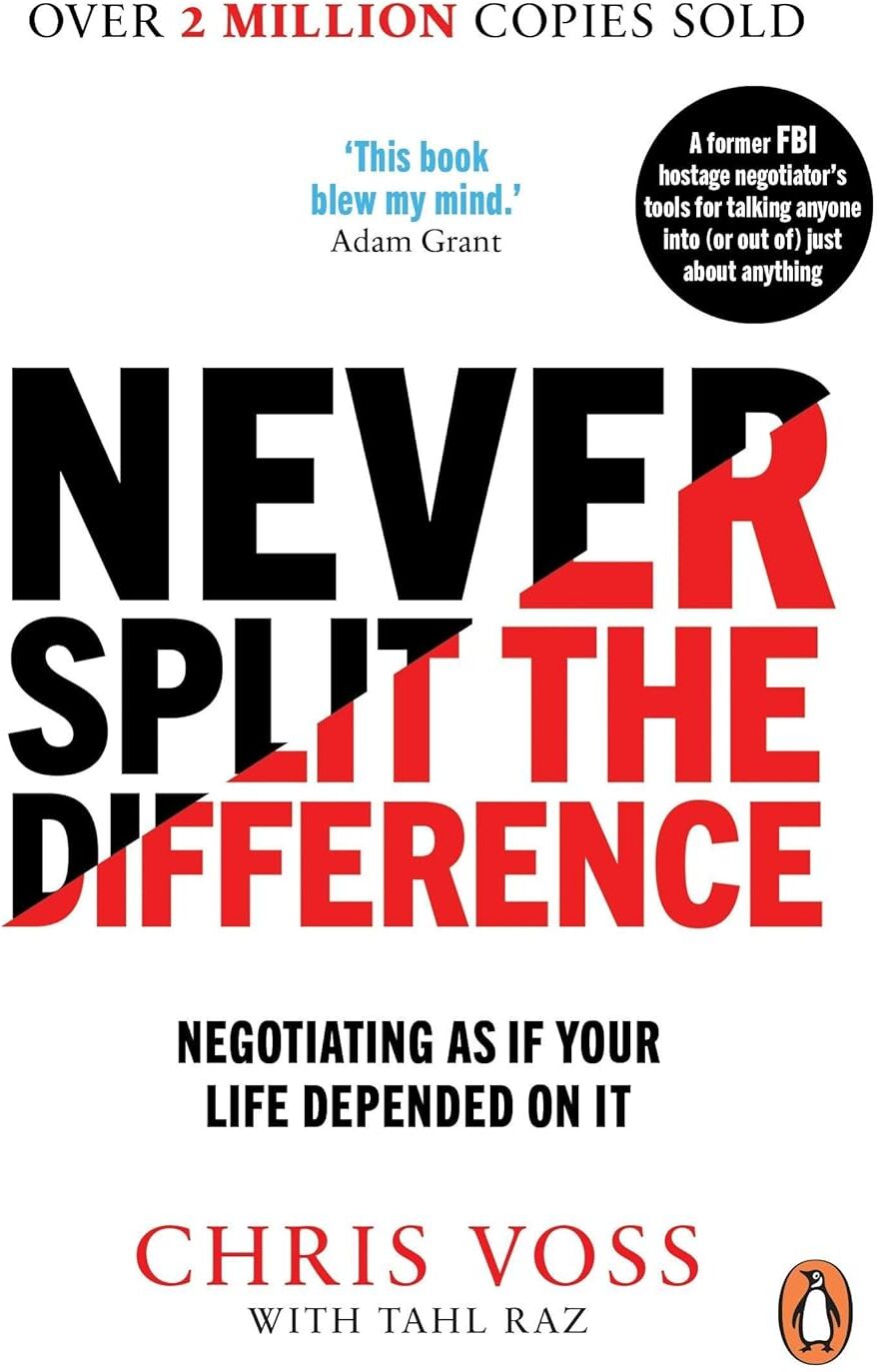
Random House Business Never Split the Difference by Chris Voss - Paperback - FBI Negotiation Skills Bestseller - Business & Self-Help BookNever Split the Difference is a practical guide to negotiation by Chris Voss, a former FBI lead international hostage negotiator. Co-written with Tahl Raz, the book draws on real, high-stakes negotiations with kidnappers, bank robbers, and terrorists to distill nine field-tested principles that anyone can use to gain an edge in business deals, salary talks, family disputes, or everyday bargaining. The book reframes negotiation as a battle of emotional intelligence rather than logic alone. After years policing the streets of Kansas City, Missouri, Chris Voss joined the FBI, where his career as a kidnapping negotiator brought him face-to-face with some of the most dangerous people on earth. This book takes readers inside that world of high-stakes negotiation, revealing the tactics that helped Voss and his colleagues succeed when it mattered most. Written by Chris Voss and Tahl Raz, this non-fiction paperback is published by Random House Business Books.7,99 £*Shipping: 2,99 £Secure redirect to the provider
-
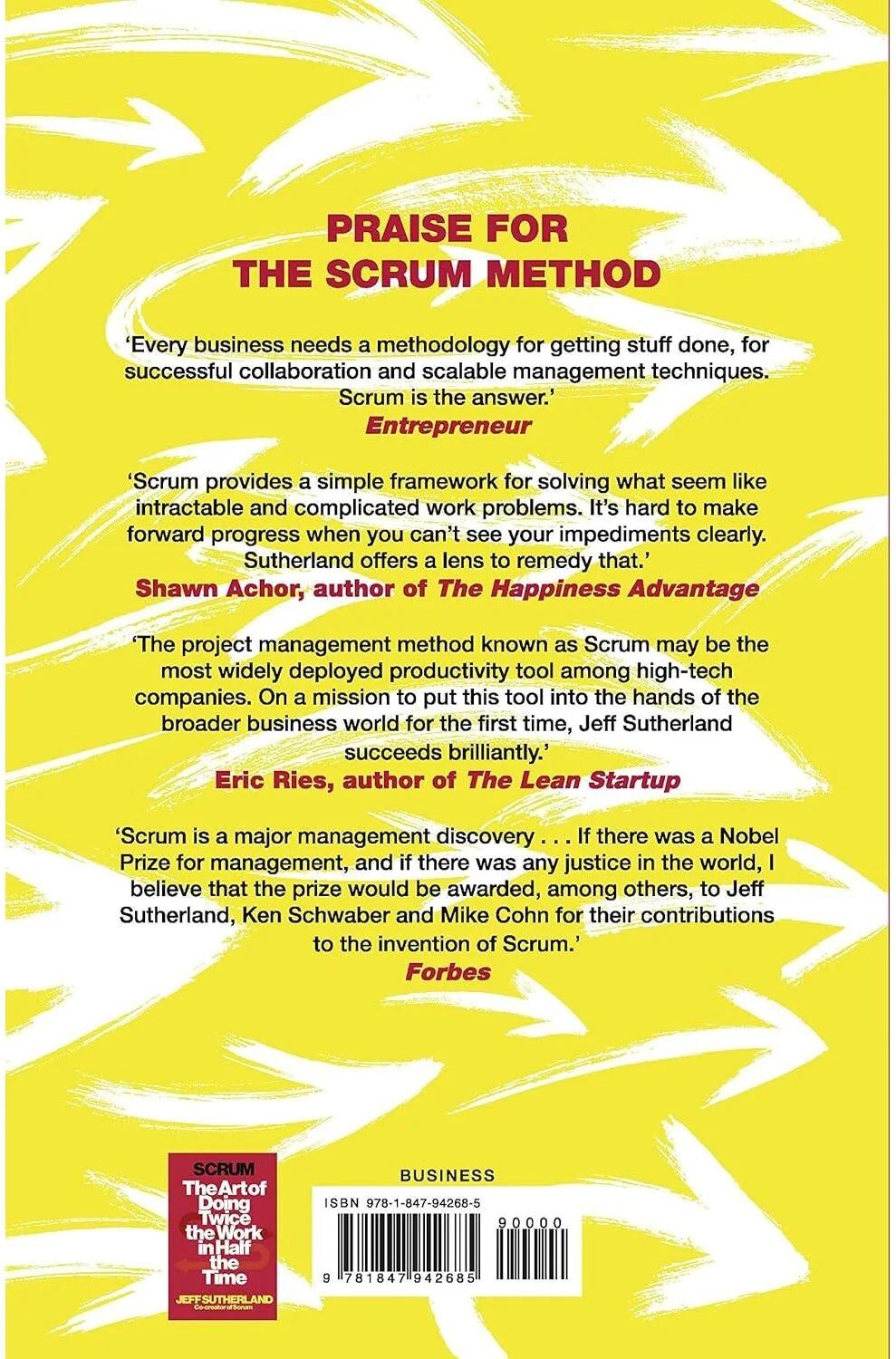
Random House Business The Scrum Fieldbook by J.J. Sutherland - Business & Management Hardback - Faster Performance, Better Results for Teams and LeadersThe Scrum Fieldbook by J.J. Sutherland is a practical guide to implementing the Scrum framework in real-world applications. Written for leaders, managers, and teams across various industries, this hardback guide builds on the success of Scrum: The Art of Doing Twice the Work in Half the Time, co-written with Jeff Sutherland. Drawing on years of experience with companies like Toyota, 3M, Schlumberger, and Bosch, Sutherland delivers a hands-on blueprint for cutting bureaucracy and accelerating delivery. The book focuses on execution, providing a step-by-step approach to transforming manufacturing, banking, government, and non-profit work.7,99 £*Shipping: 2,99 £Secure redirect to the provider
-
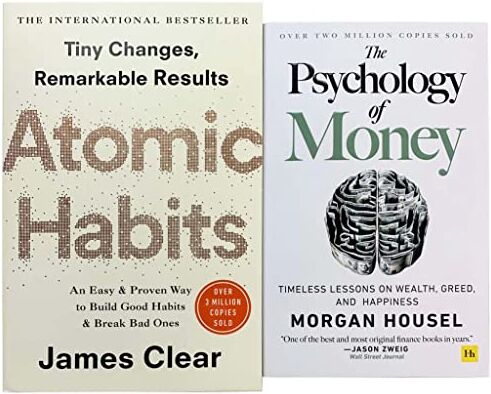
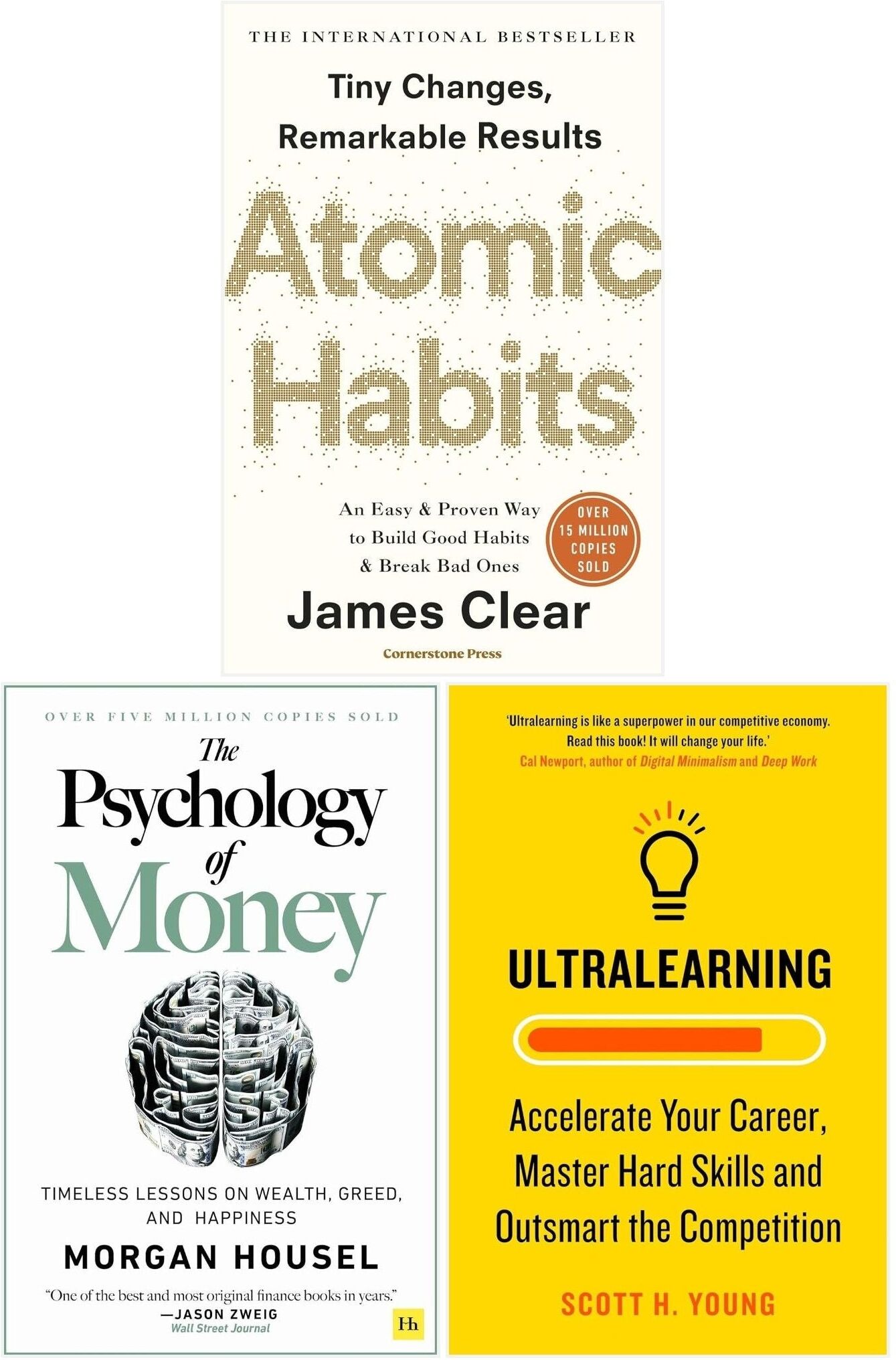
Thorsons/Cornerstone/Harriman House Ultralearning, Atomic Habits and The Psychology of Money 3 Books SetUltralearning Future-proof your career and maximize your competitive advantage by learning the skill necessary to stay relevant, reinvent yourself, and adapt to whatever the workplace throws your way in this essential guide. Faced with tumultuous economic times and rapid technological change, staying ahead in your career depends on continual learning―a lifelong mastery of new ideas, subjects, and skills. If you want to accomplish more and stand apart from everyone else, you need to become an ultralearner. Atomic Habits Transform your life with tiny changes in behaviour, starting now. People think that when you want to change your life, you need to think big. But world-renowned habits expert James Clear has discovered another way. He knows that real change comes from the compound effect of hundreds of small decisions: doing two push-ups a day, waking up five minutes early, or holding a single short phone call. The Psychology of Money Doing well with money isn't necessarily about what you know. It's about how you behave. And behavior is hard to teach, even to really smart people. Money investing, personal finance, and business decisions is typically taught as a math-based field, where data and formulas tell us exactly what to do. But in the real world people don't make financial decisions on a spreadsheet. They make them at the dinner table, or in a meeting room, where personal history, your own unique view of the world, ego, pride, marketing, and odd incentives are scrambled together.29,99 £*Shipping: 2,99 £Secure redirect to the provider
-
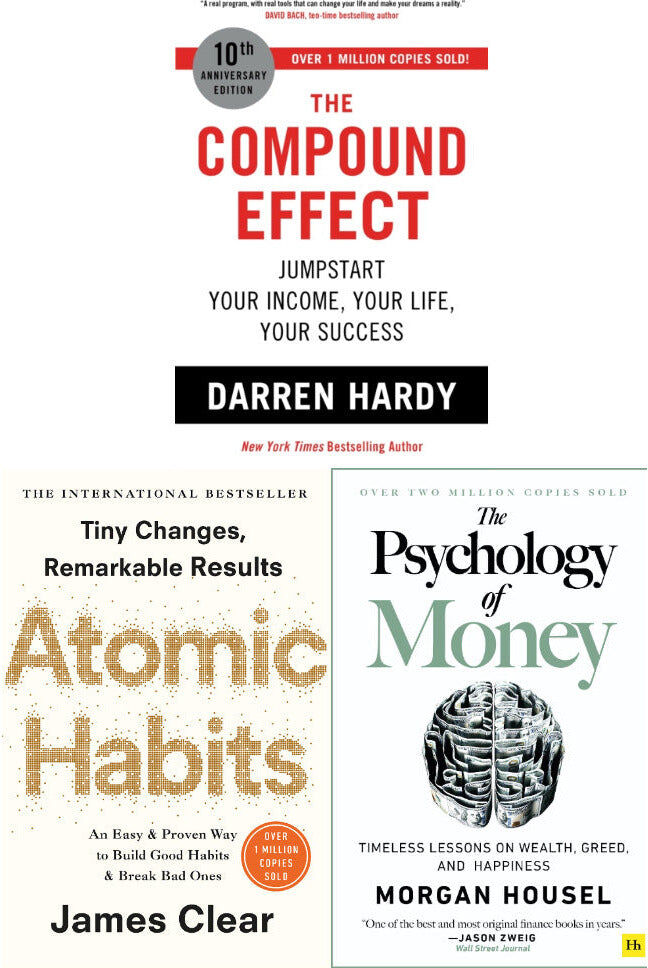
Harriman House Atomic Habits, The Compound Effect, The Psychology of Money 3 Books Collection SetAtomic Habits People think that when you want to change your life, you need to think big. But world-renowned habits expert James Clear has discovered another way. He knows that real change comes from the compound effect of hundreds of small decisions: doing two push-ups a day, waking up five minutes early, or holding a single short phone call. The Compound Effect As the central curator of the success media industry for over 25 years, author Darren Hardy has heard it all, seen it all, and tried most of it. This book reveals the core principles that drive success. The Compound Effect contains the essence of what every superachiever needs to know, practice, and master to obtain extraordinary success. Inside you will find strategies on: How to win--every time! The Psychology of Money Doing well with money isn't necessarily about what you know. It's about how you behave. And behavior is hard to teach, even to really smart people. Money investing, personal finance, and business decisions is typically taught as a math-based field, where data and formulas tell us exactly what to do. But in the real world people don't make financial decisions on a spreadsheet.22,95 £*Shipping: 2,99 £Secure redirect to the provider
-
Which assets apply to small business owners for the income-expenditure calculation method?
Small business owners can include various assets in the income-expenditure calculation method, such as revenue from sales, rental income, interest earned from investments, and any other sources of income related to the business. Additionally, assets like equipment, inventory, and property can also be considered in the calculation as they contribute to the overall financial health of the business. It is important for small business owners to accurately track and account for all assets to ensure an accurate income-expenditure calculation. **
-
Which business or financial newspaper?
The Wall Street Journal is a highly respected business and financial newspaper that provides in-depth coverage of the financial markets, global economy, and corporate news. It is known for its comprehensive reporting, insightful analysis, and high-quality journalism, making it a valuable resource for investors, business professionals, and anyone interested in staying informed about the world of finance. With its reputation for accuracy and integrity, The Wall Street Journal is a trusted source for business and financial news. **
-
Which assets are applicable for small business owners using the simplified income-statement method?
Small business owners using the simplified income-statement method can include various assets on their balance sheet. These assets typically include cash, accounts receivable, inventory, equipment, and any other tangible assets used in the business operations. Intangible assets such as patents or trademarks may also be included if applicable. It is important for small business owners to accurately track and report these assets to ensure the financial health and success of their business. **
-
Which assets are applicable for small business owners for the simplified income-statement method?
Small business owners can use the simplified income-statement method for assets that are considered to be current assets, such as cash, accounts receivable, inventory, and prepaid expenses. These assets are typically liquid and are expected to be converted into cash within a year. Fixed assets, such as equipment or property, are not typically included in the simplified income-statement method as they are not easily converted into cash. **
Which assets are applicable for small business owners using the cash basis accounting method?
Small business owners using the cash basis accounting method can only record assets that are purchased with cash and have been paid for. This means that assets such as cash, inventory purchased with cash, equipment bought outright with cash, and accounts receivable that have been paid in cash are applicable for small business owners using this method. Assets that are purchased on credit or financed through loans are not recorded until the cash transaction occurs. **
How can I output the random method in the main method?
You can output the random method in the main method by first creating an instance of the Random class. Then, you can call the nextInt() method on the Random instance to generate a random number. Finally, you can use the System.out.println() method to output the random number to the console. Here's an example: ```java public class Main { public static void main(String[] args) { Random random = new Random(); int randomNumber = random.nextInt(100); // Generate a random number between 0 and 99 System.out.println("Random number: " + randomNumber); } } ``` **
Top-Angebote
Products related to Random-House-Business-Harriman:
-
Random House Business/Harriman House ltd Atomic Habits & The Psychology of Money – 2 Books Collection Set Personal Growth, Wealth & Mindset BestsellersAtomic Habits People think that when you want to change your life, you need to think big. But world-renowned habits expert James Clear has discovered another way. He knows that real change comes from the compound effect of hundreds of small decisions: doing two push-ups a day, waking up five minutes early, or holding a single short phone call. He calls them atomic habits. In this ground-breaking book, Clears reveals exactly how these minuscule changes can grow into such life-altering outcomes. He uncovers a handful of simple life hacks (the forgotten art of Habit Stacking, the unexpected power of the Two Minute Rule, or the trick to entering the Goldilocks Zone), and delves into cutting-edge psychology and neuroscience to explain why they matter. Along the way, he tells inspiring stories of Olympic gold medalists, leading CEOs, and distinguished scientists who have used the science of tiny habits to stay productive, motivated, and happy. The Psychology of Money Doing well with money isn't necessarily about what you know. It's about how you behave. And behaviour is hard to teach, even to really smart people. Money investing, personal finance, and business decisions is typically taught as a math-based field, where data and formulas tell us exactly what to do. But in the real world people don't make financial decisions on a spreadsheet. They make them at the dinner table, or in a meeting room, where personal history, your own unique view of the world, ego, pride, marketing, and odd incentives are scrambled together. In The Psychology of Money, award-winning author Morgan Housel shares 19 short stories exploring the strange ways people think about money and teaches you how to make better sense of one of life's most important topics.15,99 £*Shipping: 2,99 £Secure redirect to the provider
-
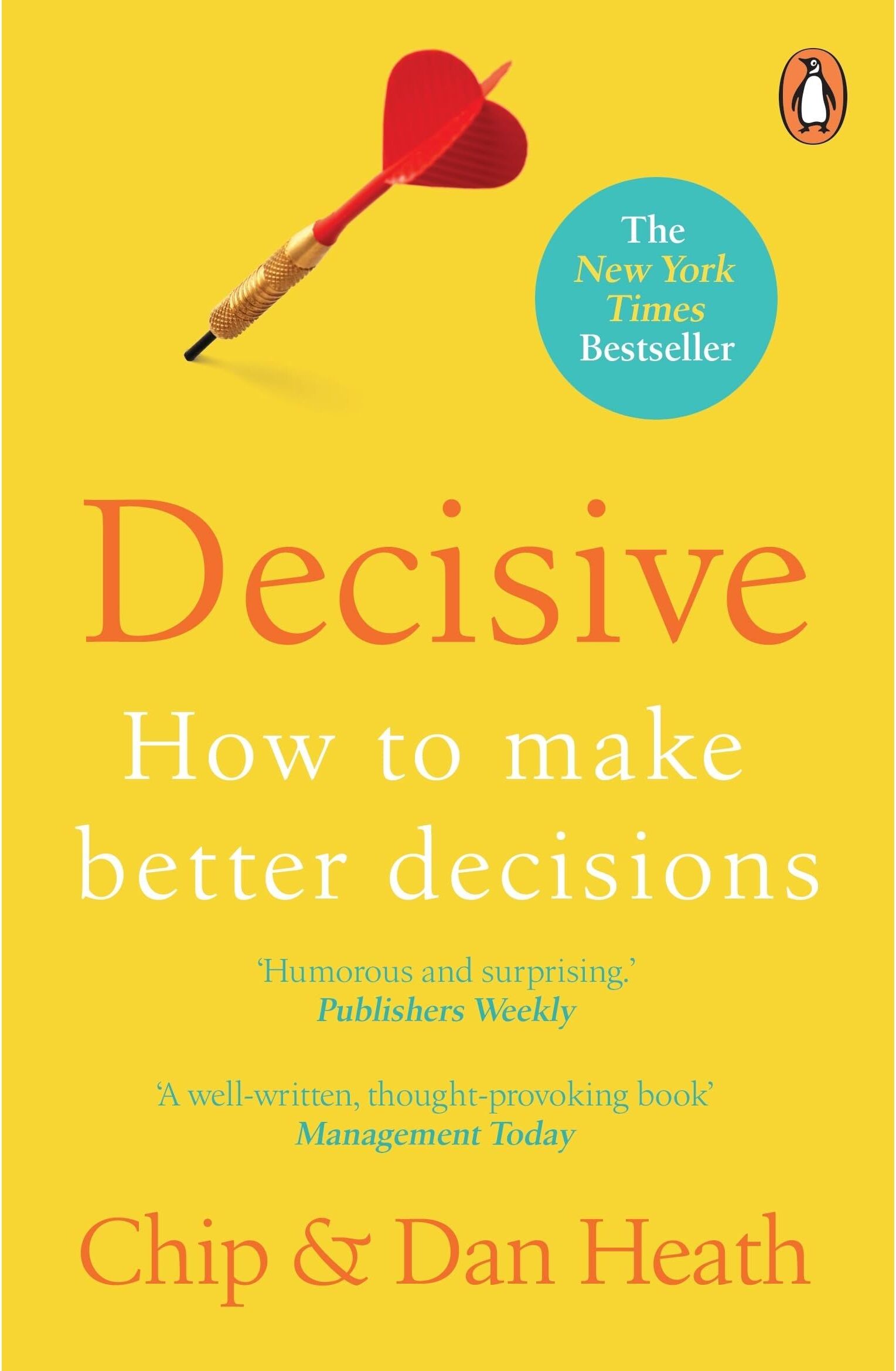
Random House Business Decisive: How to Make Better Decisions by Chip & Dan HeathThe New York Times-bestselling authors of Switch and Made to Stick offer a fascinating tour through the workings of our minds to reveal how to make smarter decisions. Research in psychology has revealed that our decisions are disrupted by an array of biases and irrationalities. We're overconfident. We seek out information that supports us and downplay information that doesn't. We get distracted by short-term emotions. When it comes to making choices, our brains are flawed instruments. So, how can we do better? In Decisive, Chip and Dan Heath draw on cutting-edge psychological research to introduce a four-step process designed to counteract these biases. They reveal how we can stop the cycle of agonizing over our decisions, how can we make group decisions without destructive politics, and how to ensure that we don't overlook precious opportunities to change our course. Along the way, they demonstrate how relatively easy it is to avoid the pitfalls and find the best answers. Written in a compulsively readable style, Decisive takes us on a tour from a rock star's ingenious decision-making trick, to a CEO's disastrous acquisition, to a single question that can often resolve thorny personal decisions, in order to offer fresh strategies and practical tools that will enable you to make better choices. Because the right decision, at the right moment, can make all the difference.9,99 £*Shipping: 2,99 £Secure redirect to the provider
-
Random House Business Never Split the Difference by Chris Voss - Paperback - FBI Negotiation Skills Bestseller - Business & Self-Help BookNever Split the Difference is a practical guide to negotiation by Chris Voss, a former FBI lead international hostage negotiator. Co-written with Tahl Raz, the book draws on real, high-stakes negotiations with kidnappers, bank robbers, and terrorists to distill nine field-tested principles that anyone can use to gain an edge in business deals, salary talks, family disputes, or everyday bargaining. The book reframes negotiation as a battle of emotional intelligence rather than logic alone. After years policing the streets of Kansas City, Missouri, Chris Voss joined the FBI, where his career as a kidnapping negotiator brought him face-to-face with some of the most dangerous people on earth. This book takes readers inside that world of high-stakes negotiation, revealing the tactics that helped Voss and his colleagues succeed when it mattered most. Written by Chris Voss and Tahl Raz, this non-fiction paperback is published by Random House Business Books.7,99 £*Shipping: 2,99 £Secure redirect to the provider
-
Random House Business The Scrum Fieldbook by J.J. Sutherland - Business & Management Hardback - Faster Performance, Better Results for Teams and LeadersThe Scrum Fieldbook by J.J. Sutherland is a practical guide to implementing the Scrum framework in real-world applications. Written for leaders, managers, and teams across various industries, this hardback guide builds on the success of Scrum: The Art of Doing Twice the Work in Half the Time, co-written with Jeff Sutherland. Drawing on years of experience with companies like Toyota, 3M, Schlumberger, and Bosch, Sutherland delivers a hands-on blueprint for cutting bureaucracy and accelerating delivery. The book focuses on execution, providing a step-by-step approach to transforming manufacturing, banking, government, and non-profit work.7,99 £*Shipping: 2,99 £Secure redirect to the provider
-
What is the manuscript submission policy of Random House publishers?
Random House does not accept unsolicited manuscripts, meaning they only consider submissions from literary agents. Authors are encouraged to find representation before submitting their work to Random House. This policy helps ensure that submissions are of a certain quality and have been vetted by professionals in the industry. **
-
What is the manuscript submission process for Random House publishers?
The manuscript submission process for Random House publishers typically involves sending a query letter or proposal to the appropriate editor or literary agent. If the editor or agent is interested, they may request to see the full manuscript. Once the manuscript is submitted, it will go through a review process to determine if it aligns with the publisher's needs and standards. If the manuscript is accepted, the author will work with an editor to prepare the book for publication. **
-
Which assets apply to small business owners for the income-expenditure calculation method?
Small business owners can include various assets in the income-expenditure calculation method, such as revenue from sales, rental income, interest earned from investments, and any other sources of income related to the business. Additionally, assets like equipment, inventory, and property can also be considered in the calculation as they contribute to the overall financial health of the business. It is important for small business owners to accurately track and account for all assets to ensure an accurate income-expenditure calculation. **
-
Which business or financial newspaper?
The Wall Street Journal is a highly respected business and financial newspaper that provides in-depth coverage of the financial markets, global economy, and corporate news. It is known for its comprehensive reporting, insightful analysis, and high-quality journalism, making it a valuable resource for investors, business professionals, and anyone interested in staying informed about the world of finance. With its reputation for accuracy and integrity, The Wall Street Journal is a trusted source for business and financial news. **
Similar search terms for Random-House-Business-Harriman
-
Thorsons/Cornerstone/Harriman House Ultralearning, Atomic Habits and The Psychology of Money 3 Books SetUltralearning Future-proof your career and maximize your competitive advantage by learning the skill necessary to stay relevant, reinvent yourself, and adapt to whatever the workplace throws your way in this essential guide. Faced with tumultuous economic times and rapid technological change, staying ahead in your career depends on continual learning―a lifelong mastery of new ideas, subjects, and skills. If you want to accomplish more and stand apart from everyone else, you need to become an ultralearner. Atomic Habits Transform your life with tiny changes in behaviour, starting now. People think that when you want to change your life, you need to think big. But world-renowned habits expert James Clear has discovered another way. He knows that real change comes from the compound effect of hundreds of small decisions: doing two push-ups a day, waking up five minutes early, or holding a single short phone call. The Psychology of Money Doing well with money isn't necessarily about what you know. It's about how you behave. And behavior is hard to teach, even to really smart people. Money investing, personal finance, and business decisions is typically taught as a math-based field, where data and formulas tell us exactly what to do. But in the real world people don't make financial decisions on a spreadsheet. They make them at the dinner table, or in a meeting room, where personal history, your own unique view of the world, ego, pride, marketing, and odd incentives are scrambled together.29,99 £*Shipping: 2,99 £Secure redirect to the provider
-
Harriman House Atomic Habits, The Compound Effect, The Psychology of Money 3 Books Collection SetAtomic Habits People think that when you want to change your life, you need to think big. But world-renowned habits expert James Clear has discovered another way. He knows that real change comes from the compound effect of hundreds of small decisions: doing two push-ups a day, waking up five minutes early, or holding a single short phone call. The Compound Effect As the central curator of the success media industry for over 25 years, author Darren Hardy has heard it all, seen it all, and tried most of it. This book reveals the core principles that drive success. The Compound Effect contains the essence of what every superachiever needs to know, practice, and master to obtain extraordinary success. Inside you will find strategies on: How to win--every time! The Psychology of Money Doing well with money isn't necessarily about what you know. It's about how you behave. And behavior is hard to teach, even to really smart people. Money investing, personal finance, and business decisions is typically taught as a math-based field, where data and formulas tell us exactly what to do. But in the real world people don't make financial decisions on a spreadsheet.22,95 £*Shipping: 2,99 £Secure redirect to the provider
-
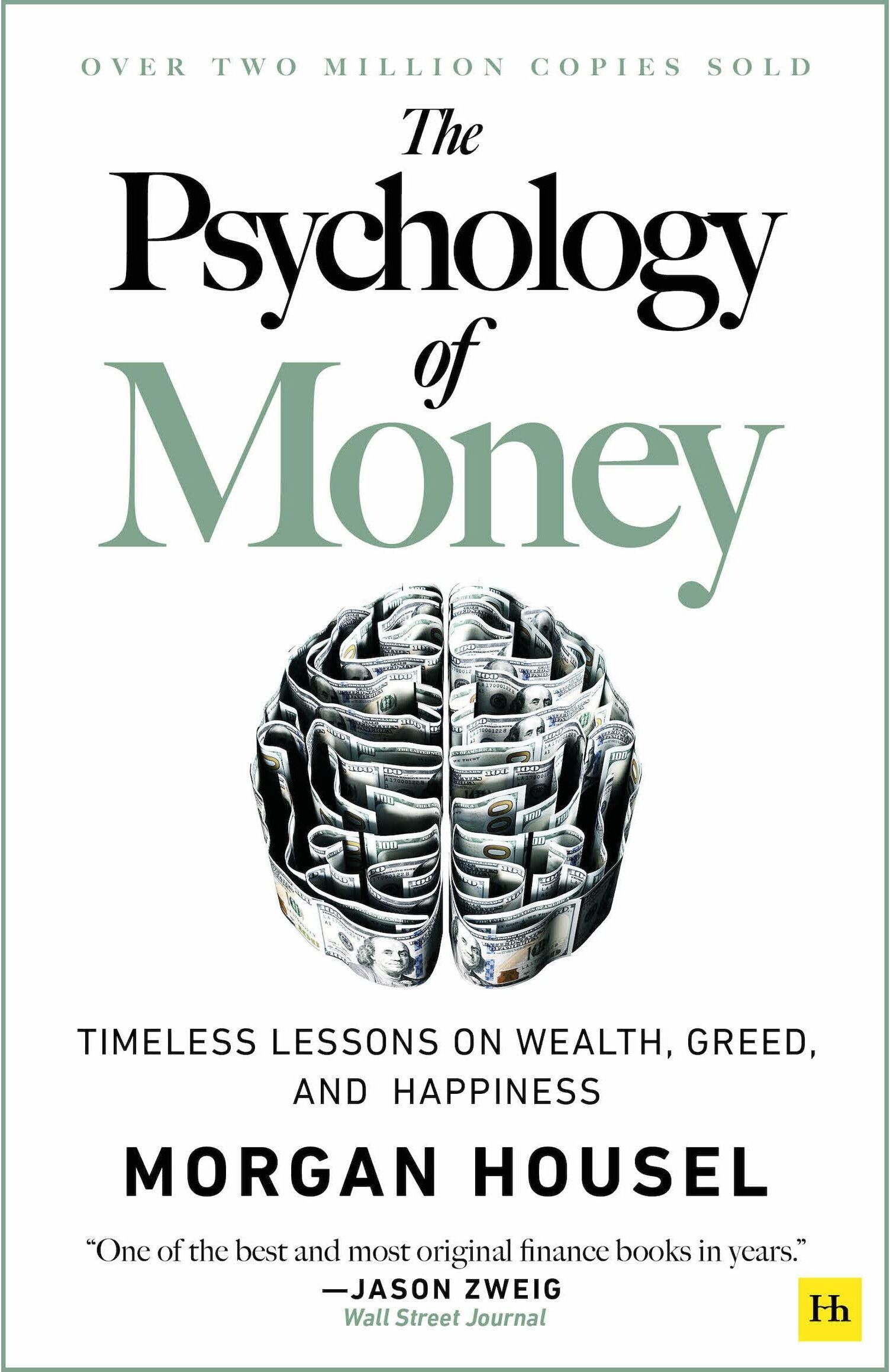
Harriman House The Psychology of Money: Timeless lessons on wealth, greed, and happiness by Morgan HouselDoing well with money isn't necessarily about what you know. It's about how you behave. And behavior is hard to teach, even to really smart people.Money investing, personal finance, and business decisions is typically taught as a math-based field, where data and formulas tell us exactly what to do. But in the real world people don't make financial decisions on a spreadsheet. They make them at the dinner table, or in a meeting room, where personal history, your own unique view of the world, ego, pride, marketing, and odd incentives are scrambled together.In The Psychology of Money, award-winning author Morgan Housel shares 19 short stories exploring the strange ways people think about money and teaches you how to make better sense of one of life's most important topics.10,99 £*Shipping: 2,99 £Secure redirect to the provider
-
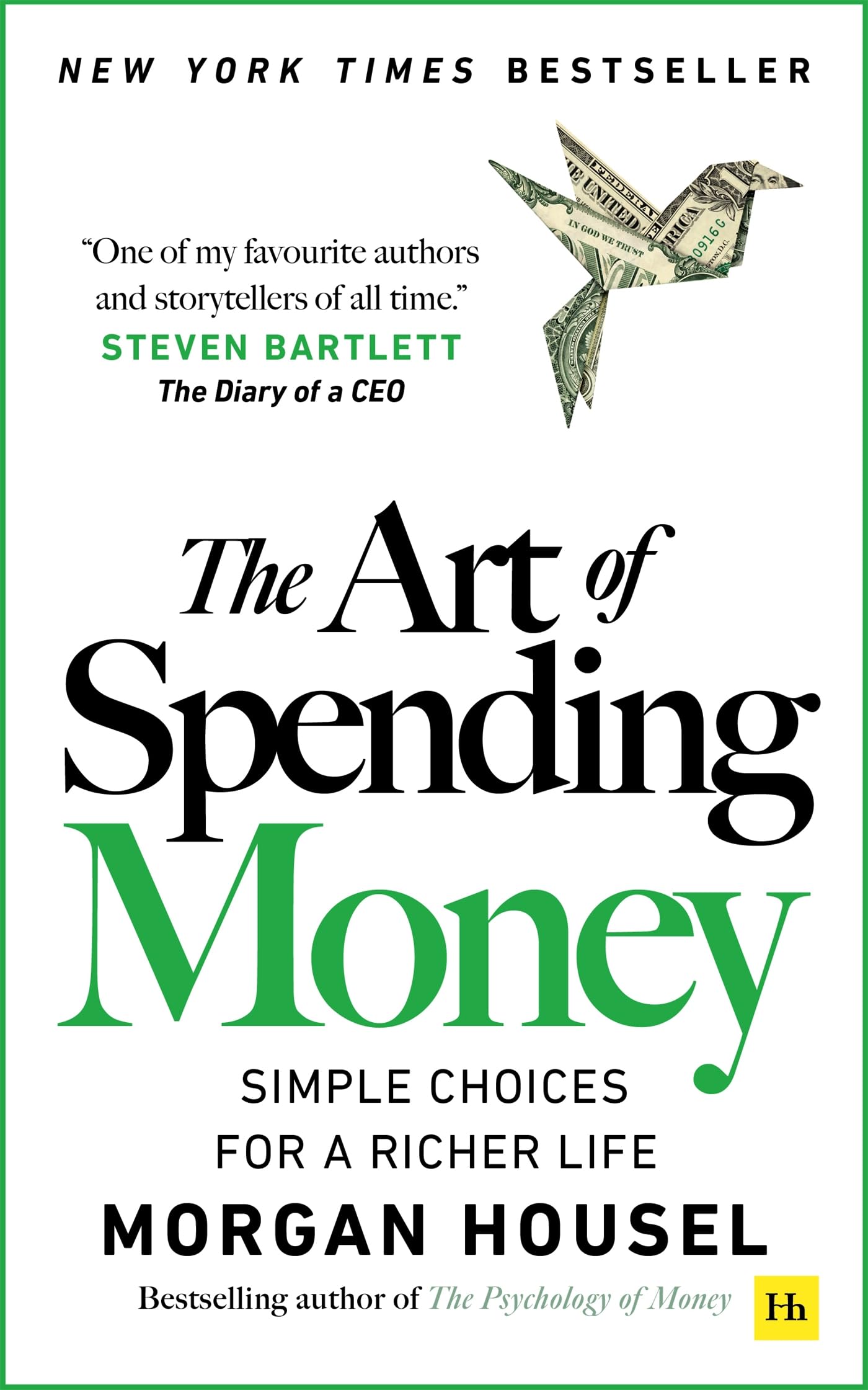
Harriman House The Art of Spending Money: Simple Choices for a Richer Life by Morgan HouselSimple lessons on harnessing the power of money to live a happier life. Can money buy happiness? Yes. Can spending it make you happier? Absolutely. Yet, many of us struggle to unlock its full potential – either by spending on things that don't bring as much joy as they should, or by avoiding investments that would truly enhance our mental well-being. In The Art of Spending Money, award-winning and global bestselling author Morgan Housel offers a refreshingly practical approach to managing wealth while finding deeper meaning and contentment. Instead of cookie-cutter financial advice, Housel provides you with psychological tools to navigate your personal relationship with money and optimise for happiness. Discover why people often mistake envy for admiration, how to align your expectations with your income, and ways to invest in future happiness while avoiding regret. Learn about the dangers of social debt and embrace the radical idea that the fastest way to build wealth is by going slow. The Art of Spending Money delves into the complexities that surround money – envy, social aspirations, identity, and insecurity – crucial aspects often missed in traditional financial books. Armed with new insights into money and wealth, you’ll learn to sidestep common spending traps, make smarter investing choices, and wield money to its fullest potential to enhance your enjoyment of life.10,99 £*Shipping: 2,99 £Secure redirect to the provider
-
Which assets are applicable for small business owners using the simplified income-statement method?
Small business owners using the simplified income-statement method can include various assets on their balance sheet. These assets typically include cash, accounts receivable, inventory, equipment, and any other tangible assets used in the business operations. Intangible assets such as patents or trademarks may also be included if applicable. It is important for small business owners to accurately track and report these assets to ensure the financial health and success of their business. **
-
Which assets are applicable for small business owners for the simplified income-statement method?
Small business owners can use the simplified income-statement method for assets that are considered to be current assets, such as cash, accounts receivable, inventory, and prepaid expenses. These assets are typically liquid and are expected to be converted into cash within a year. Fixed assets, such as equipment or property, are not typically included in the simplified income-statement method as they are not easily converted into cash. **
-
Which assets are applicable for small business owners using the cash basis accounting method?
Small business owners using the cash basis accounting method can only record assets that are purchased with cash and have been paid for. This means that assets such as cash, inventory purchased with cash, equipment bought outright with cash, and accounts receivable that have been paid in cash are applicable for small business owners using this method. Assets that are purchased on credit or financed through loans are not recorded until the cash transaction occurs. **
-
How can I output the random method in the main method?
You can output the random method in the main method by first creating an instance of the Random class. Then, you can call the nextInt() method on the Random instance to generate a random number. Finally, you can use the System.out.println() method to output the random number to the console. Here's an example: ```java public class Main { public static void main(String[] args) { Random random = new Random(); int randomNumber = random.nextInt(100); // Generate a random number between 0 and 99 System.out.println("Random number: " + randomNumber); } } ``` **
* All prices are inclusive of VAT and, if applicable, plus shipping costs. The offer information is based on the details provided by the respective shop and is updated through automated processes. Real-time updates do not occur, so deviations can occur in individual cases. ** Note: Parts of this content were created by AI.